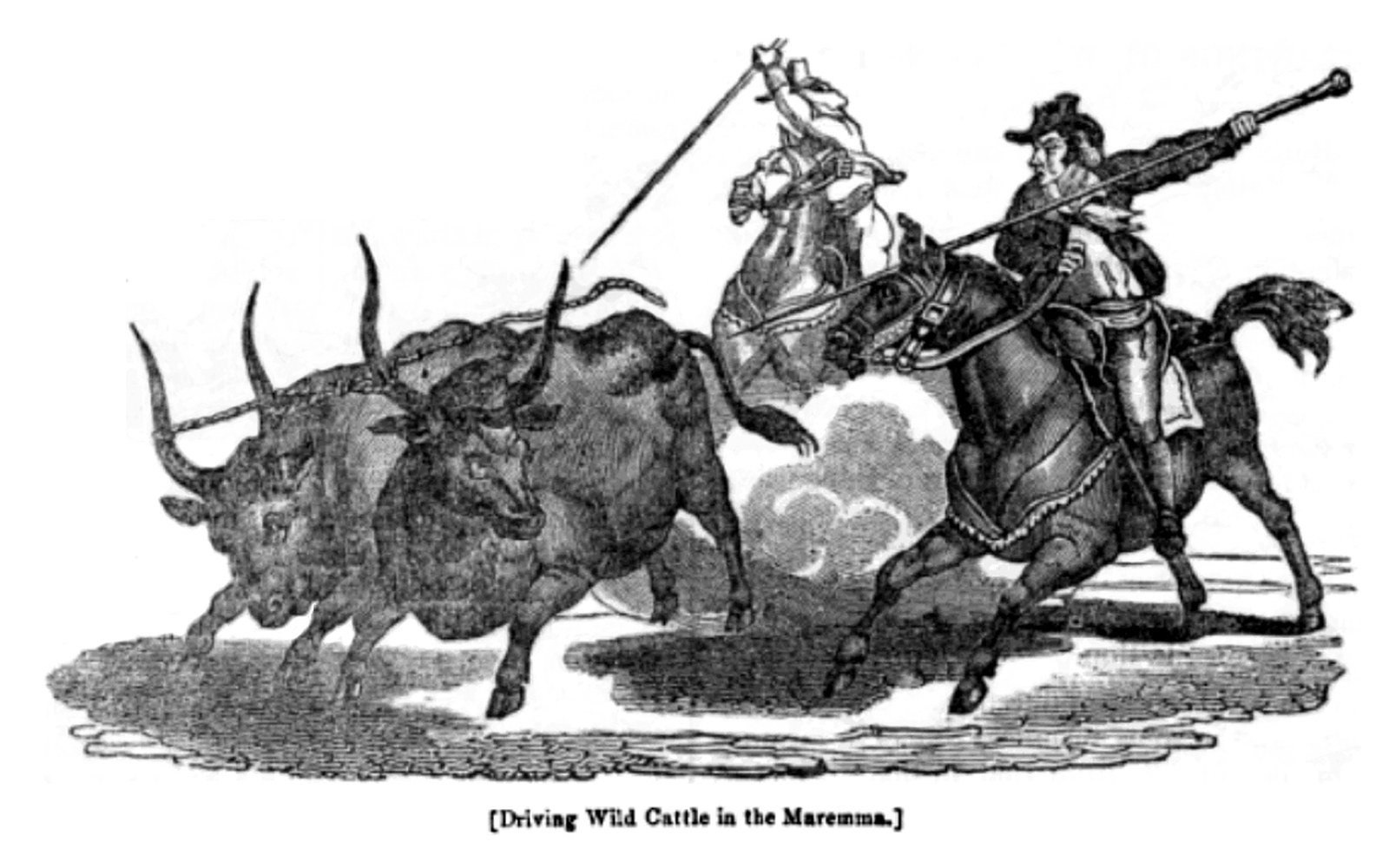
Photo: Driving wild cattle in the Maremma · Wikimedia Commons
The Maremma — coastal marsh and scrub stretching across southern Tuscany and into northern Lazio — is not land that forgave carelessness. Before drainage reshaped it in the twentieth century, it was malarial, seasonally flooded, and grazed by animals that had grown half-wild on its roughness. The men who worked it on horseback, the butteri (singular: buttero), developed a practice that matched the ground: patient, low-key, built on presence rather than force.
They are still there. The Parco Regionale della Maremma ↗, centred on the comune of Alberese in the province of Grosseto, maintains a working estate — the Azienda Regionale Agricola di Alberese — where butteri continue to work Maremmana cattle on horseback in a manner that has not changed structurally since at least the eighteenth century. The job is not performance. It is herding, sorting and moving animals across ground that still asks something of a horse and rider.
What the buttero carries and how he uses it
The defining tool is the asta — a long wooden pole, typically of cornel wood, tipped with a small iron spike or goad. Where the American cowboy reaches for a rope and where the Spanish vaquero uses a garrocha to topple cattle, the buttero uses the asta to guide, press and redirect. The technique is lateral: the pole is used against the animal's flank or haunch to influence direction without the confrontation of a loop around the neck. It rewards reading cattle — knowing where an animal intends to go before it commits — rather than catching it after the fact.
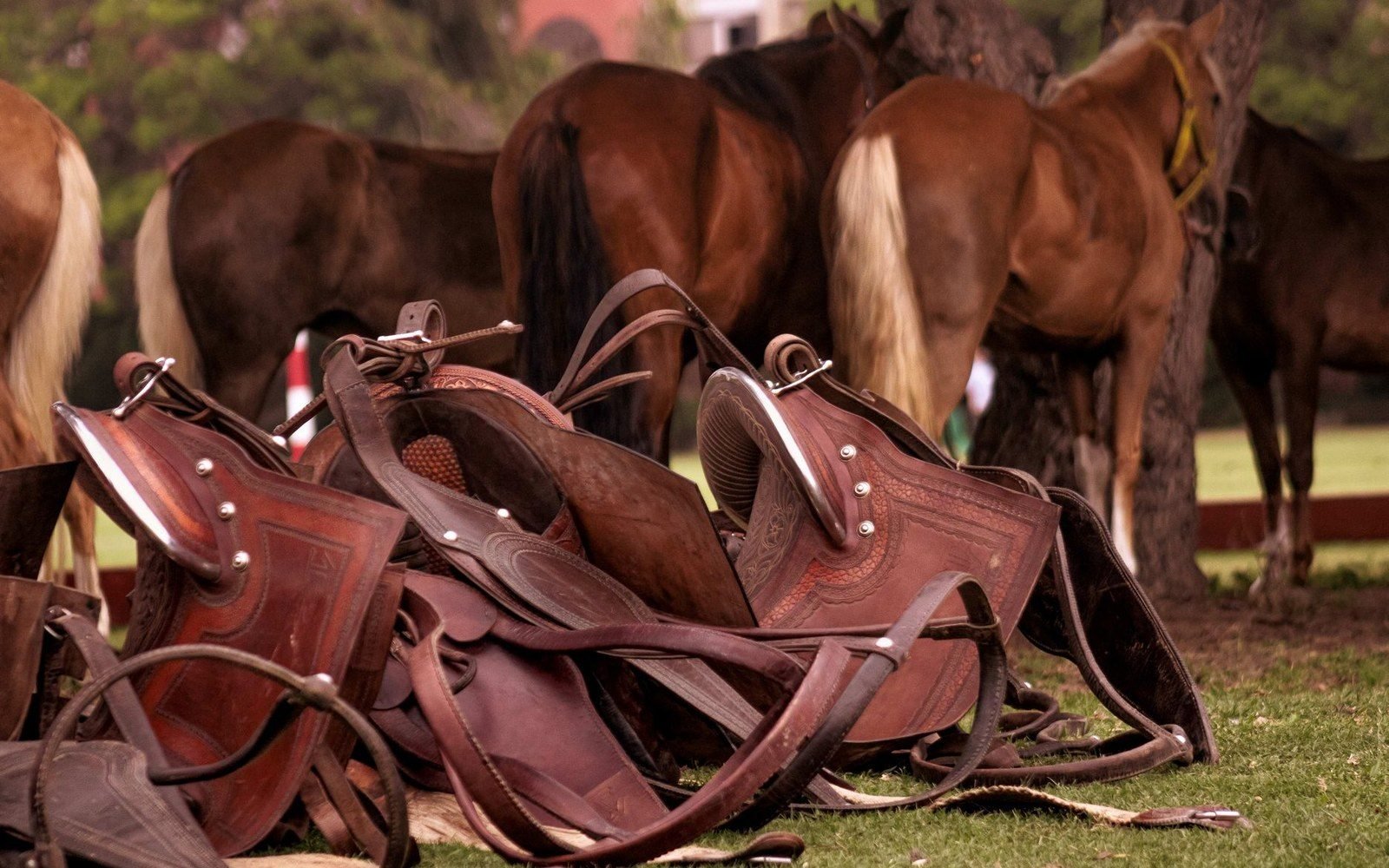
This shapes the horse underneath the man. The Maremmano, the breed that underpins the work, is heavy-headed and calm, with the kind of steady nerve that does not amplify the tension of working livestock. It is not quick in the way a cutting horse is quick. It moves deliberately into position, and it is trained to hold still enough that the rider can use both hands on the asta without the horse changing its line underneath him. That partnership — a calm horse in a fixed position, a man with a long pole making small corrections — is the visual grammar of Maremman herding.
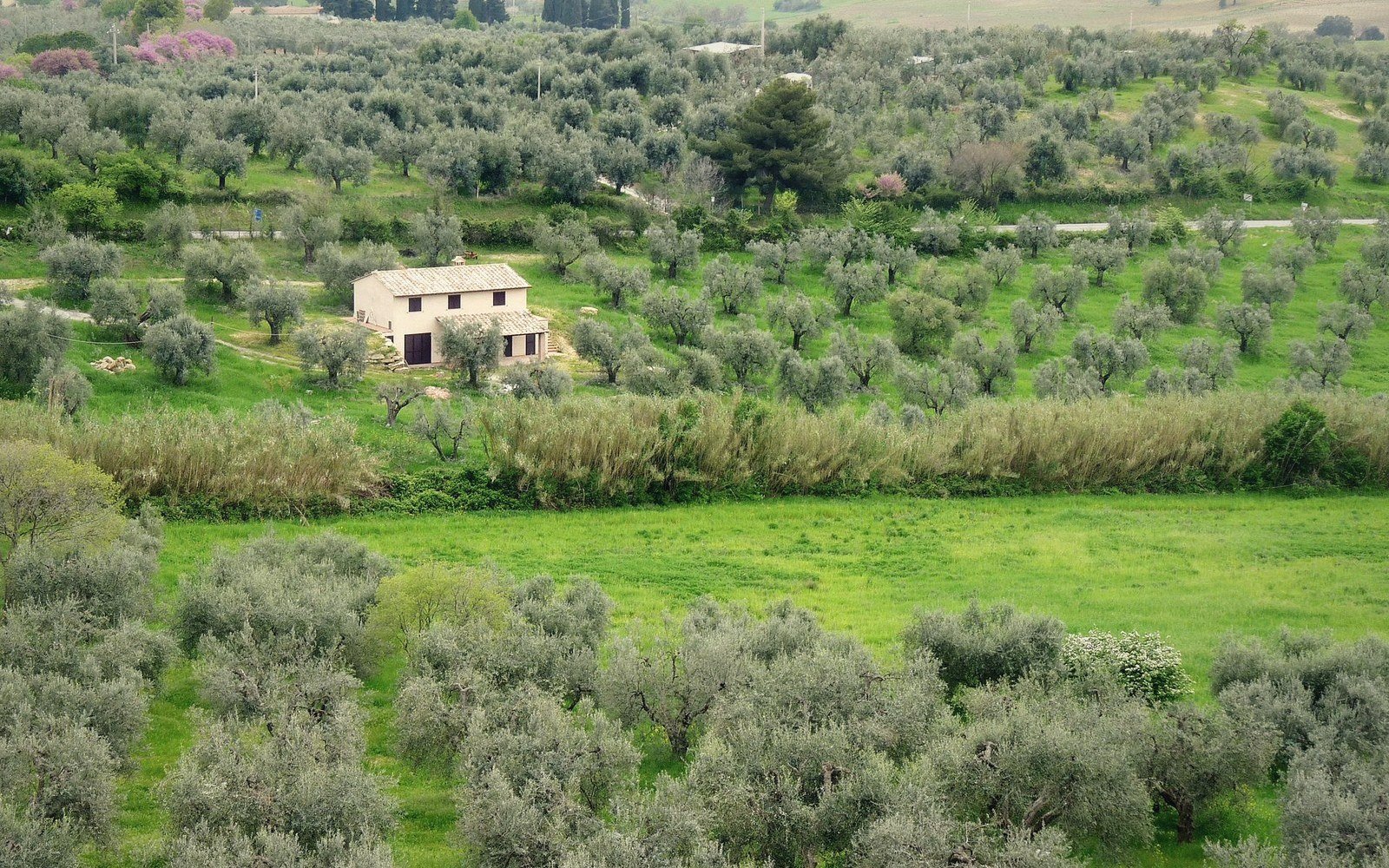
The saddle is as important as the pole. The scafarda, the traditional Maremman working saddle, sits the rider deep, with a high cantle that braces the lower back and a pommel built to take the weight of a man leaning out over a difficult animal. It is not an elegant object. It is a piece of equipment designed for a working day that could last eight or ten hours across broken ground, in heat in summer and mud in late winter, and it distributes that day across the rider's seat in a way that a modern saddle does not. Its construction — the high wooden tree, the stuffed panels, the specific angle of the stirrups — reflects every hour of that working year.
Season and movement
The buttero's year was shaped by transhumance — the seasonal movement of cattle between lowland winter pasture and highland summer grazing. In the Maremma this meant moving the great herds of Maremmana cattle, the long-horned white breed that grazed the marshes, up toward the Apennine pastures in late spring and back again in autumn. The routes — tratturi — were fixed across centuries, and the work of moving hundreds of animals along them required exactly the skills the buttero had: the ability to hold a herd together across open ground, to read the edges of the group and respond before animals peeled away.
Drainage and land reform in the twentieth century broke the traditional transhumance pattern. The great Maremman estates — the fattorie — were partly redistributed after the Second World War, and the world the buttero had worked in was restructured around it. The herds shrank. The routes fell out of use. What survived did so partly because the Parco Regionale della Maremma and the Alberese estate preserved a working method that would otherwise have fragmented into demonstration and then disappeared. The men working at Alberese today are not re-enactors. They are employed to manage cattle, and they do it on horseback because that remains the most effective way to work the ground and the animals that live on it.
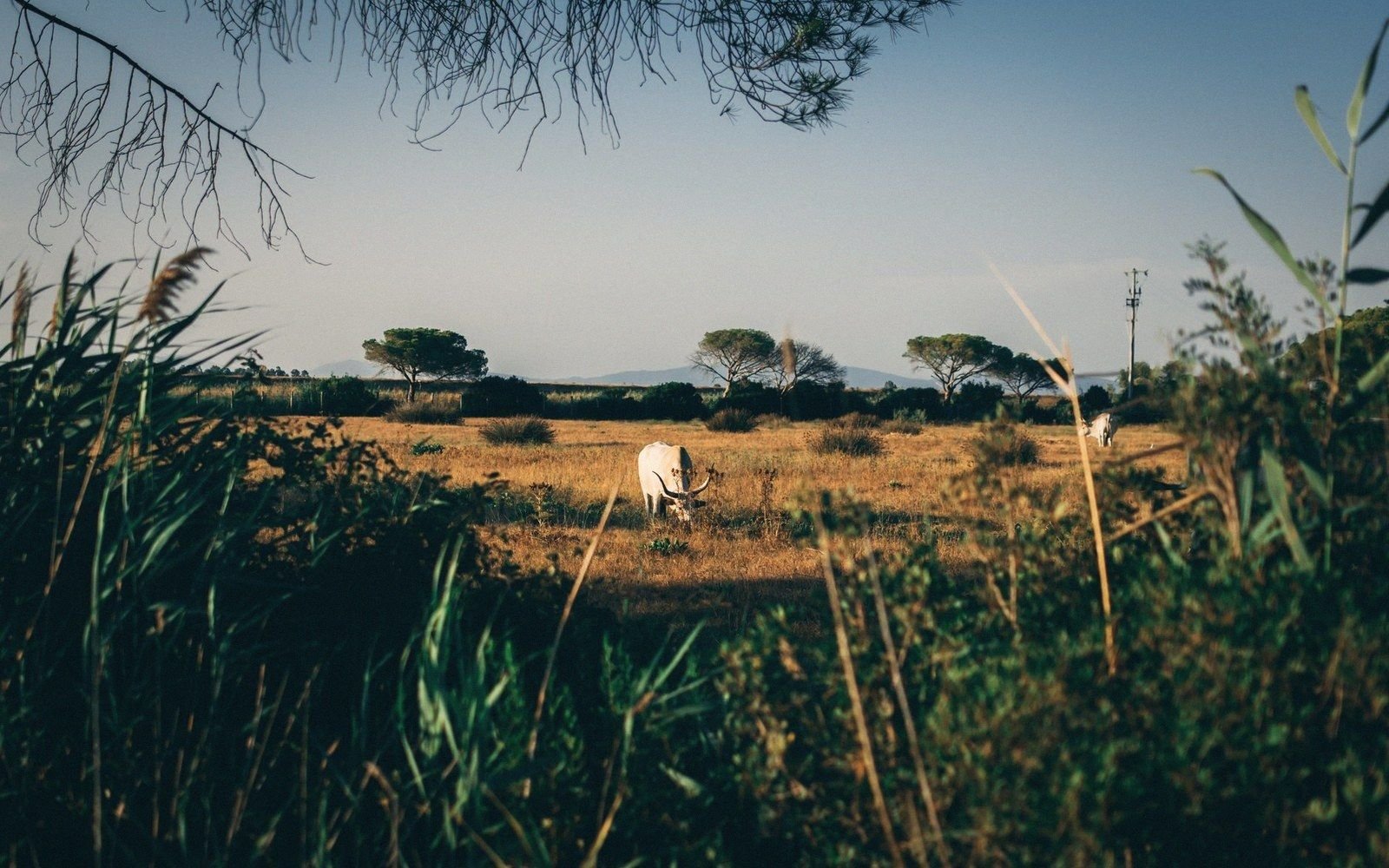
Maremmana cattle carry long lyre horns and centuries of selection on open range; they are alert and strong-willed.
Photo: Lorenc Memaga / Pexels
A reputation that needed defending
In 1890, William Frederick Cody — Buffalo Bill — brought his Wild West show to Rome. The butteri, by then already acquiring the slightly mythologised quality that working traditions attract when the world around them changes, were described in the accompanying press as being comparable to American cowboys. Whether as a point of professional pride or something more territorial, a group of butteri, reportedly led by the capo-buttero Augusto Imperiali, met Cody's troupe in a public contest of horsemanship near the city. The accounts that survive differ in their particulars, but the substance of the story — Italian herdsmen holding their own against the professionals of the American West — entered the folklore of the trade and is still repeated at Alberese.
What the story preserves, whatever its precise accuracy, is something real about the nature of the skill. The buttero's horsemanship is not theatrical. It has no audience in the field. But it is precise in the ways that matter — horse management, cattle reading, the use of a specialized tool — and men who had spent their lives doing it were not obviously outclassed by men who had spent their lives performing a version of it.
What survives and why it holds
The buttero is not an anachronism protected behind a rope. At Alberese, the Azienda Regionale Agricola maintains a genuine working cattle operation on roughly three and a half thousand hectares of the Uccellina coastal strip and the surrounding agricultural land. The Maremmana breed — listed in the official Italian breed registers and maintained in part through institutional commitment at exactly this kind of estate — still needs moving, sorting and doctoring in ways that favour a man on a horse over a man in a vehicle. The ground is part of it: the Uccellina hills and the reed-bordered drainage channels of the coastal plain are not friendly to machinery, and a horse with a rider who knows the cattle reads a situation faster than any vehicle can manoeuvre.
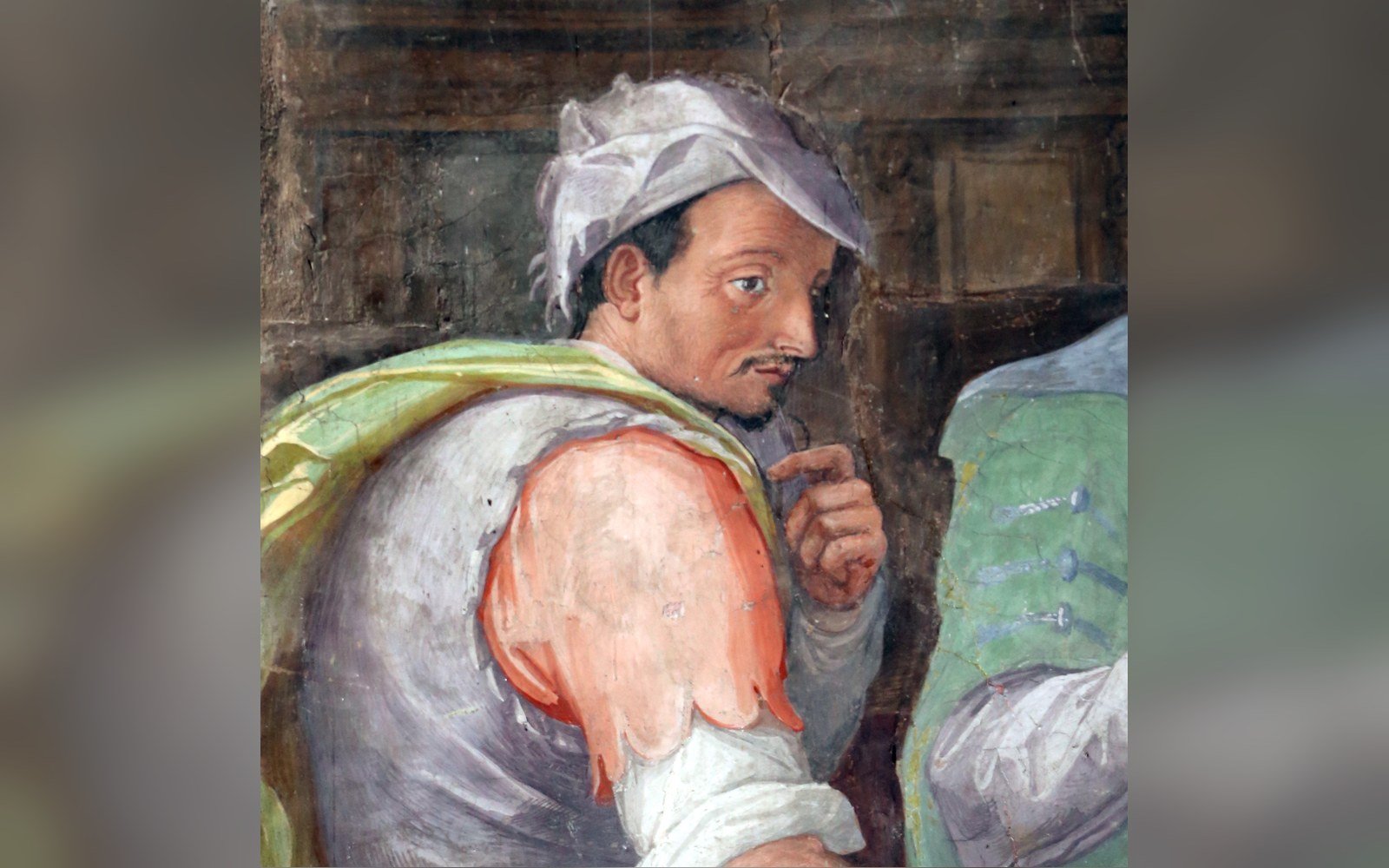
Herding at Alberese is done from the saddle because a horse reads the edge of a herd faster than a vehicle can turn.
Photo: Giovanni maria butteri, Gentiluomini e Popolani durante la ricognizione delle spoglie di San Giovanni Gualberto, 02 autoritratto 2 · Wikimedia Commons
There is also something about the Maremmana cattle themselves. They are not docile commercial stock. They carry centuries of selection on open range, and they are alert and strong-willed. A buttero who cannot read the edge of the herd — who cannot feel where tension is building before it becomes movement — will simply lose animals into the macchia, the dense Mediterranean scrub, where they will not easily be found again. The skill is functional because the landscape and the animal demand it. That, in the end, is the most honest account of why the butteri are still there: not because anyone decided to preserve them, but because the land has not yet decided it can do without them.
Read next