The Maremma
Coastal marsh and scrub in Tuscany and northern Lazio — wet, rough and malarial until drainage, which is why the horse bred for it is heavy-boned and sure-footed.
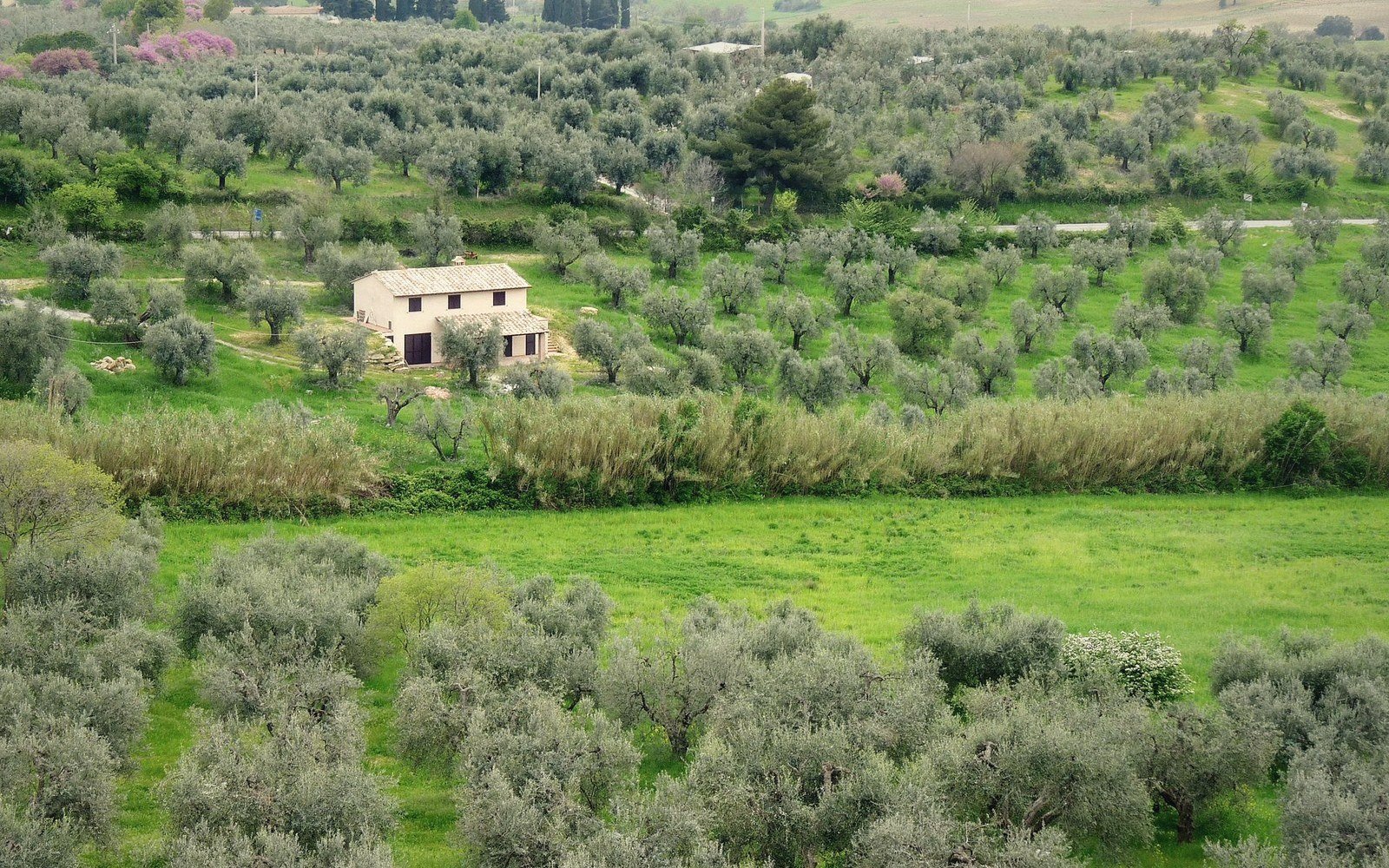
Photo: Maremma from Magliano 2 · Wikimedia Commons
A strip of coast that was lethal for most of history, and shaped the horse that lived there anyway.
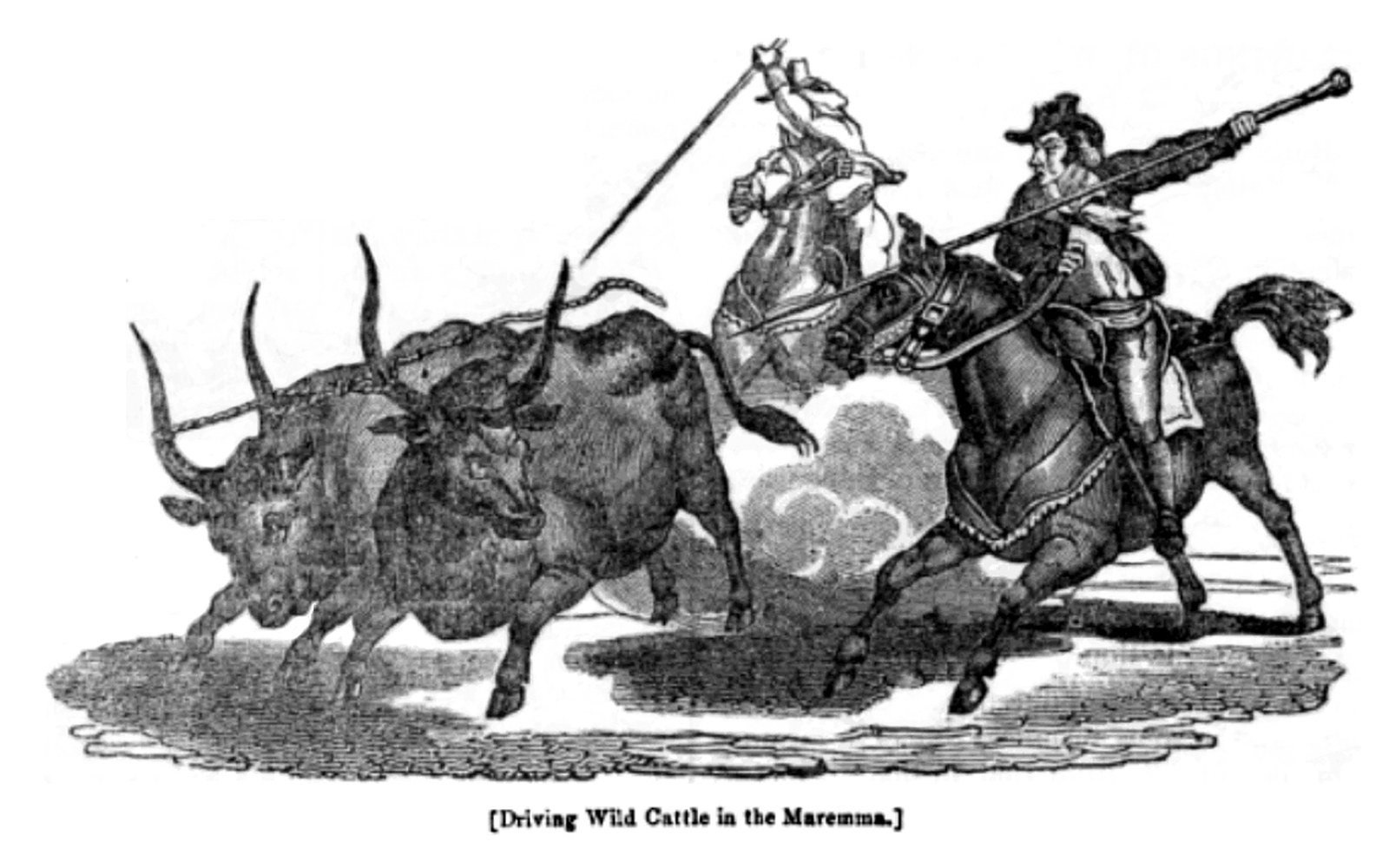
The asta is used against the flank to turn an animal: the buttero guides cattle rather than catching them.
Photo: Driving wild cattle in the Maremma · Wikimedia Commons
Marsh, scrub and miasma
The Maremma runs along the Tyrrhenian coast from roughly the province of Grosseto southward into northern Lazio — a low-lying belt of pineta (pine forest), macchia (dense Mediterranean scrub), river estuaries and, until the twentieth century, standing water. For most of recorded history it was one of the most dangerous stretches of land in Italy, not because of its terrain but because of what bred in it: the Anopheles mosquito. Malaria was so endemic that the zone was all but uninhabitable from late spring to early autumn. Transhumance — the seasonal movement of livestock between lowland winter pasture and upland summer ground — was not a pastoral preference here; it was a survival strategy. The herds and the men who worked them moved up into the hills of the Colline Metallifere and the Apennine margins as soon as the heat made the coastal flats lethal, and came back down only when autumn cooled the marsh.
Every place named in this entry is a comune or a region, and sits on the map at its real coordinates.
Geometry: real coordinates, projected
What defined the country was the horse. The Maremmano — the breed that emerged from this ground — is heavy-boned, calm, and built low and solid, qualities that read differently once you understand the country that produced them. Ground that shifts between waterlogged clay and cracked summer hardpan asks for broad hooves and a deliberate stride, not the quick-turning lightness of a mountain breed. The macchia is dense enough to snag a rider and tear at a horse's legs; moving cattle through it rewards patience and a steady temperament over speed.
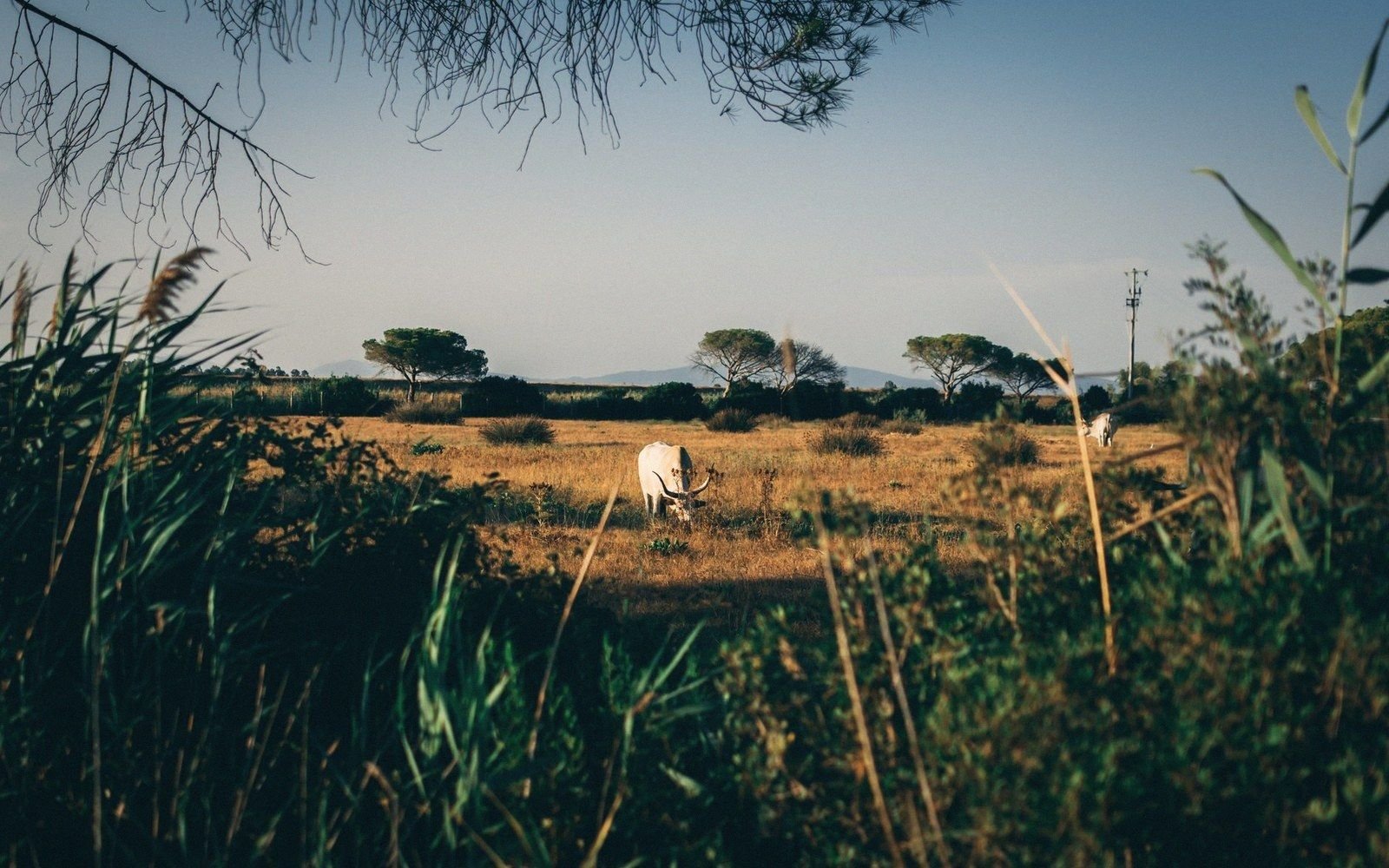
Maremmana cattle carry long lyre horns and centuries of selection on open range; they are alert and strong-willed.
Photo: Lorenc Memaga / Pexels
Drainage and what it changed
Serious land reclamation began under the Lorraine grand dukes in the eighteenth century and continued, fitfully, through the nineteenth. The decisive transformation came after 1930, when the Italian state's large-scale bonifiche — reclamation schemes — drained the major wetlands, brought in settlers from northern and central Italy, and effectively ended the malarial cycle that had defined the region for centuries. The Parco Regionale della Maremma ↗, established in 1975 and centred on the Uccellina hills near Grosseto, preserves a strip of the old coastal landscape — pineta, dune, and remnant marsh — as one of the last places on the Italian coast where the original ecology is still legible.
Chronology
Chronology
- 18th centuryLorraine grand-duke drainage schemes begin in earnest
- Post-1930Large-scale Italian state bonifiche drain the major coastal wetlands
- 1975Parco Regionale della Maremma established, comune of Grosseto
Drainage changed the economic geography permanently. The great latifondo estates — vast, under-managed landholdings grazed by semi-feral cattle and horses — began to break up. The butteri, the mounted herdsmen who had worked those estates with a long goad rather than a lasso, found their traditional territory shrinking. The Maremmana cattle breed and the horse that worked alongside them survived, but in reduced numbers and in a landscape that was now agricultural rather than wild.
What the ground still tells you
Even drained and settled, the Maremma retains enough of its old character to make sense of the animals it produced. Travel inland from Grosseto toward the Colline Metallifere and the country remains rough — volcanic tufo (compacted ash-stone) outcrops, steep-sided creek valleys, patches of unclaimed macchia. The soil alternates between clay heavy enough to bog a lighter animal and the friable, pale stuff of former marsh. None of this is mountain terrain, which is why the horse it built is nothing like the compact Haflinger of Alto Adige; but none of it is open plain either, which is why it is nothing like a speed breed.
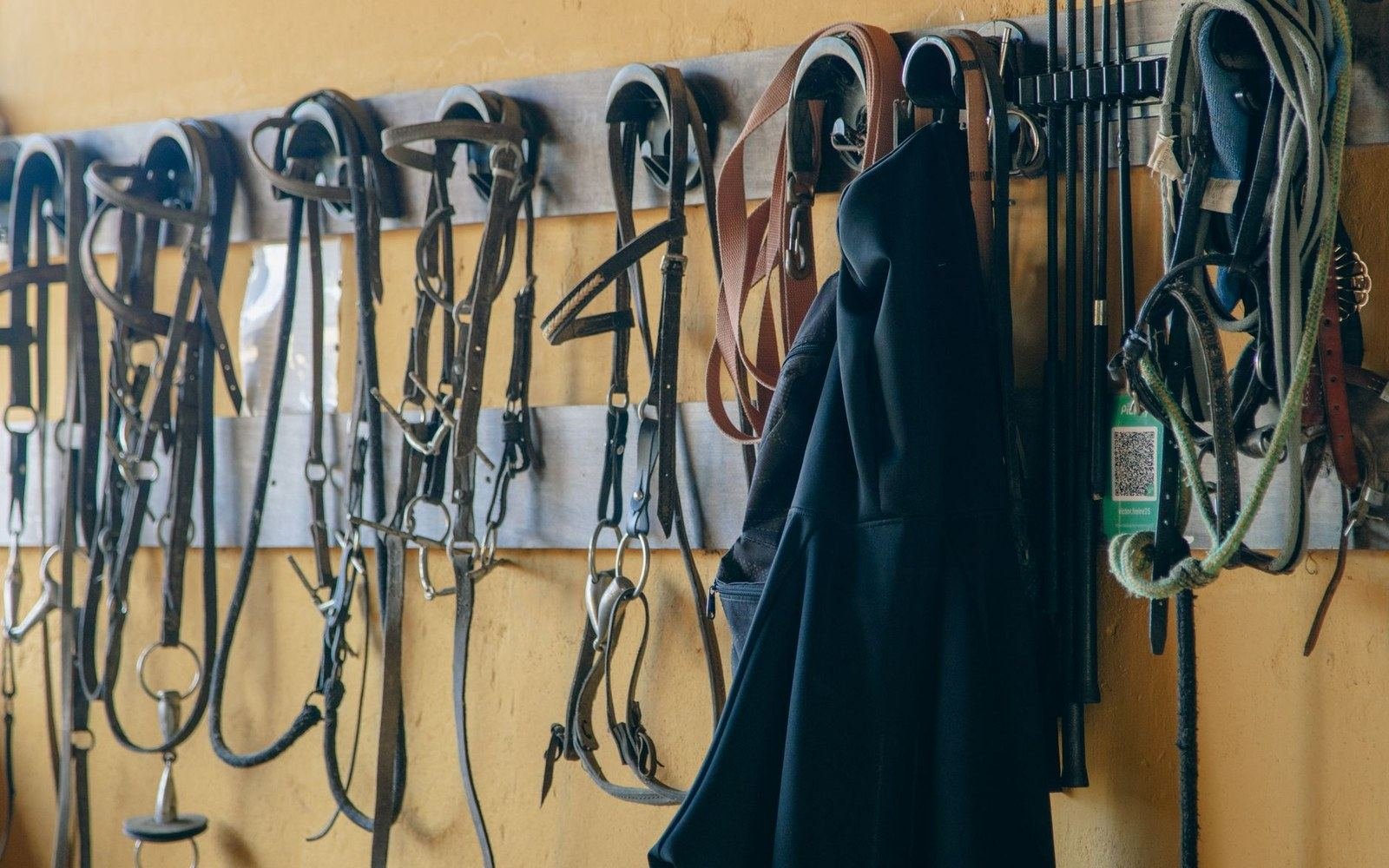
A working tack wall: the buttero’s kit is a deep saddle, a bridle and a long pole — no rope.
Photo: Wallace Silva / Pexels
The region's persistent isolation — kept thin of population by malaria, poor roads and absentee landowners — meant that outside blood improved the Maremmano only slowly and unevenly. The result is a horse that is genuinely old in type: a Mediterranean working animal whose conformation was set by centuries of specific selection pressure rather than by any breeding programme's deliberate hand. That solidity is not an aesthetic accident. It is the ground speaking through the animal — wet ground, scrubby ground, ground that for most of history killed anyone who tried to stay on it too long.
Read next