Photo: claudia ceruti / Pexels
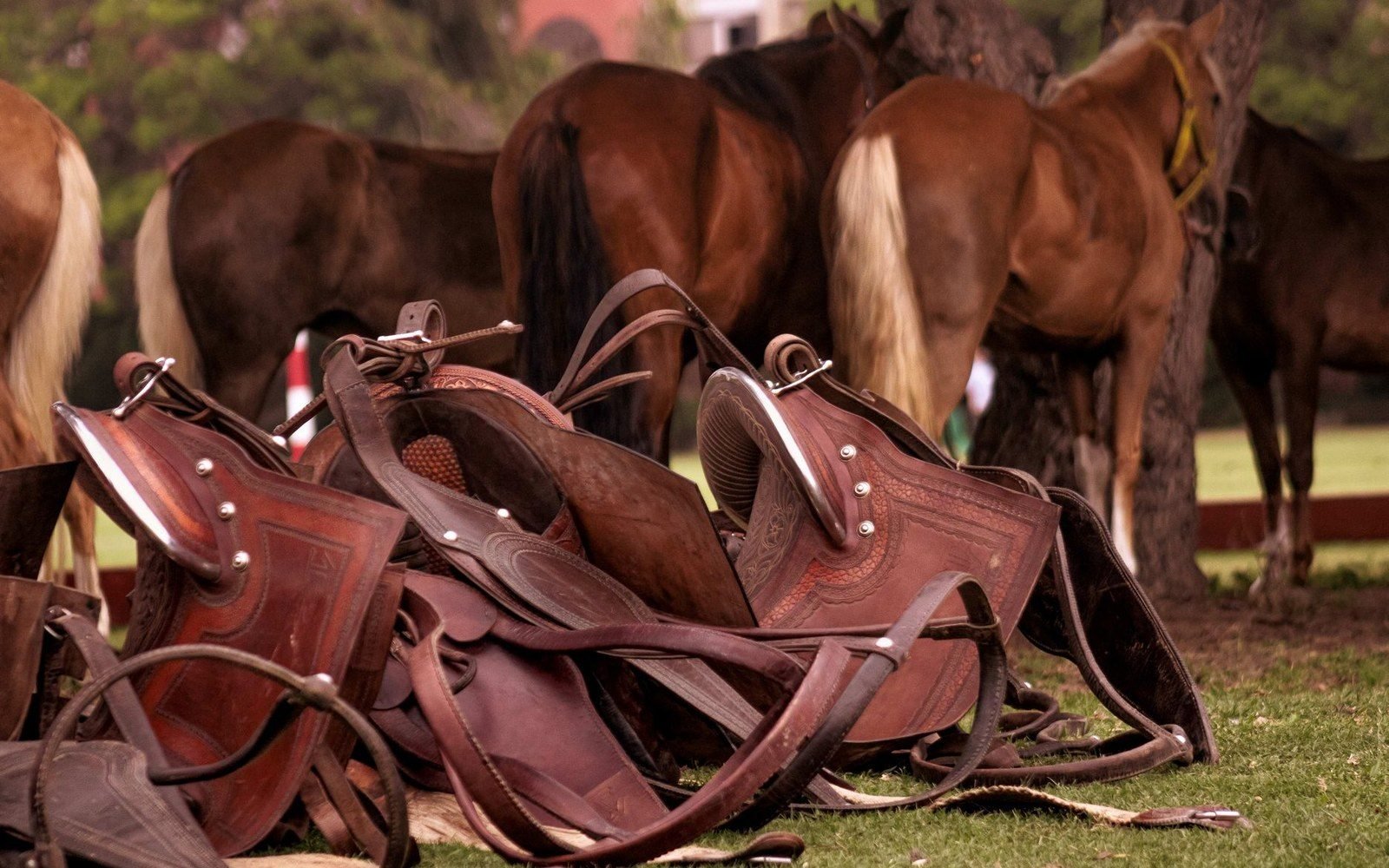
A saddle is a solution to a problem. The scafarda — the traditional working saddle of the Maremma — solves several at once, and every one of those solutions is legible in the shape.
The tree is high at both ends: a pronounced pommel in front, a tall cantle behind. Between them, the seat is deep. When a buttero, the mounted herdsman of the coastal marshes, braces against a bolting Maremmana cow or leans out to work his long stick across scrubby macchia, that geometry holds him in place without his gripping hard. The horse can move under him; the rider stays upright and ready. Hours in the saddle, over ground that is wet in winter and rutted in summer, demand that kind of passive security.
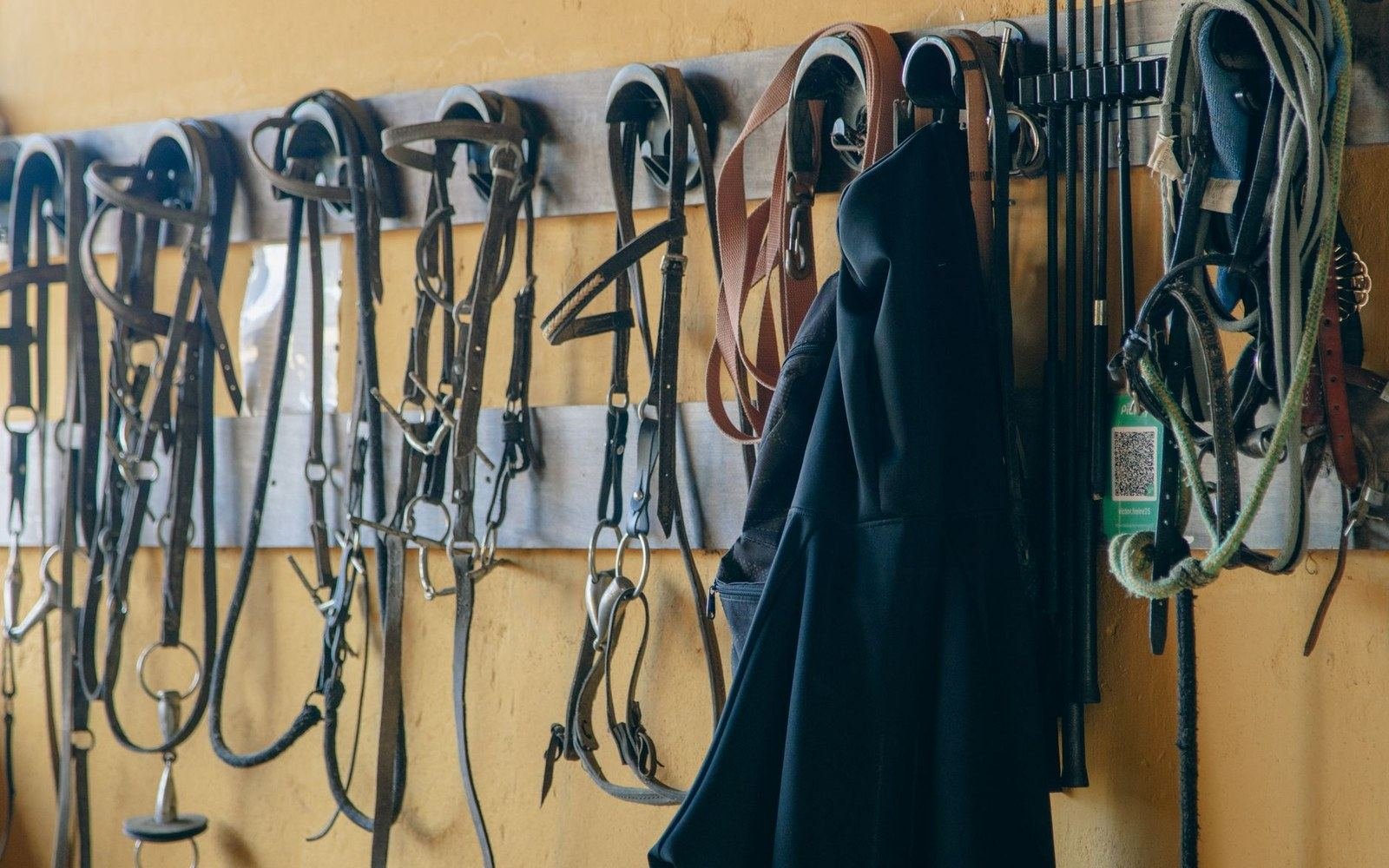
A working tack wall: the buttero’s kit is a deep saddle, a bridle and a long pole — no rope.
Photo: Wallace Silva / Pexels
The stirrups hang long, on heavy stirrup leathers, and the iron is a broad, almost wooden tread — more platform than loop. Again, the logic is functional: a man who spends a full working day mounted needs to stand occasionally, to shift his weight, to take the shock of broken ground through his legs rather than his spine. Wide stirrups allow that without trapping the foot, which matters when the terrain around the Parco Regionale della Maremma ↗, at Alberese, in the comune of Grosseto, is soft enough to swallow a hock.
The leather is thick and plain. There is minimal ornament on a working scafarda — occasional tooling at the skirts, sometimes a simple border, nothing that draws the eye or catches on undergrowth. What decoration exists tends to concentrate at the pommel cap, where the rider's hand rests most naturally and where a little craft was worth the trouble. This is not austerity for its own sake; it is the economy of people who maintained their own tack and needed every part of it to last.
Weight is a consideration too. The scafarda is heavier than a modern all-purpose saddle, but it distributes that weight broadly over the Maremmano's back — a horse bred, as the land required, for endurance rather than speed. The wide panels make sense on a wide-backed horse doing a long, slow job. Fit and function are one.
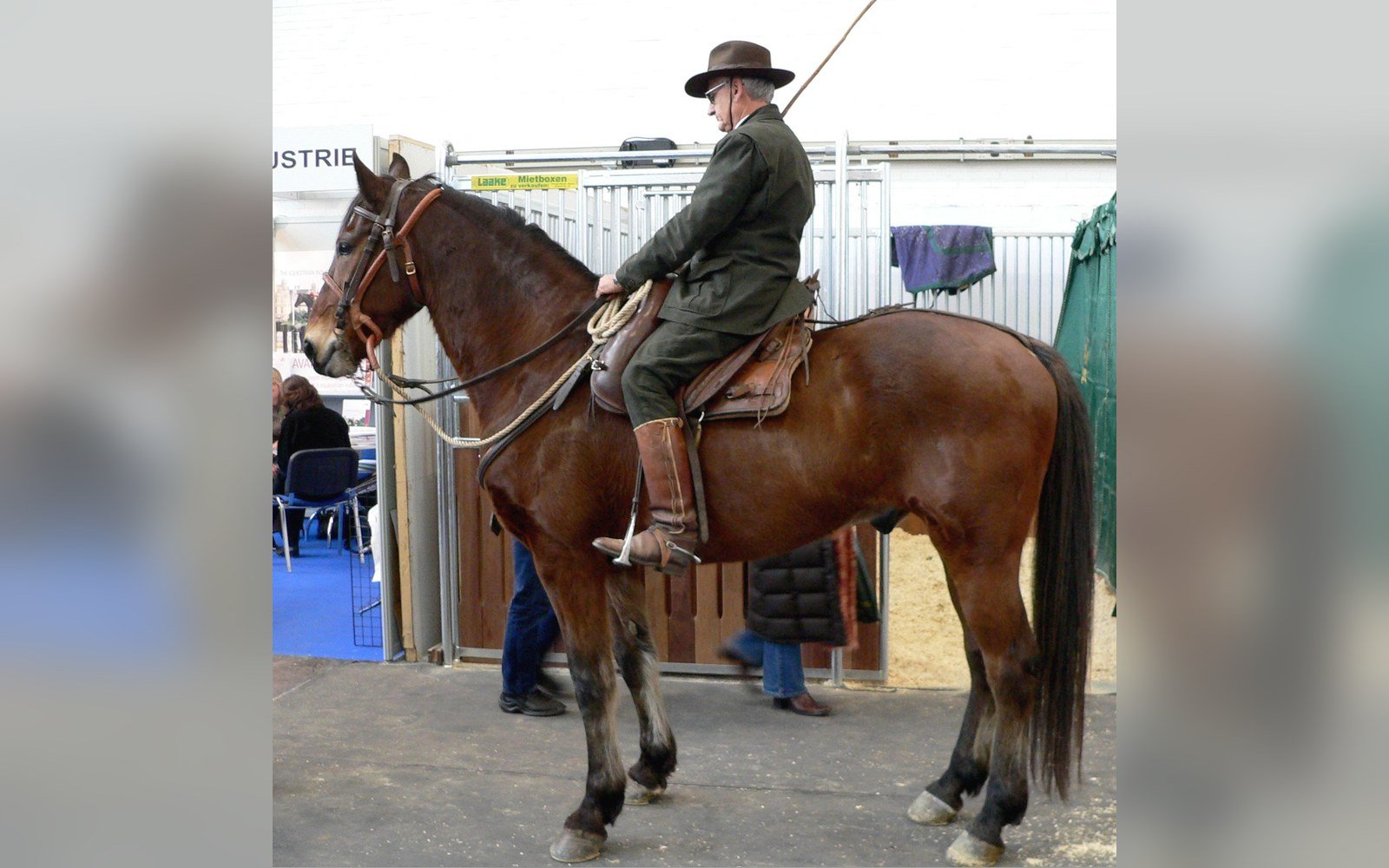
The scafarda is not extinct. Butteri still use traditional saddles at the cattle roundups that take place each spring and autumn in the Maremma, and the form has changed little because the job has changed little.
Read next