The Maremmano
Heavy, calm and durable, bred to carry a man all day over broken country rather than to look elegant doing it.
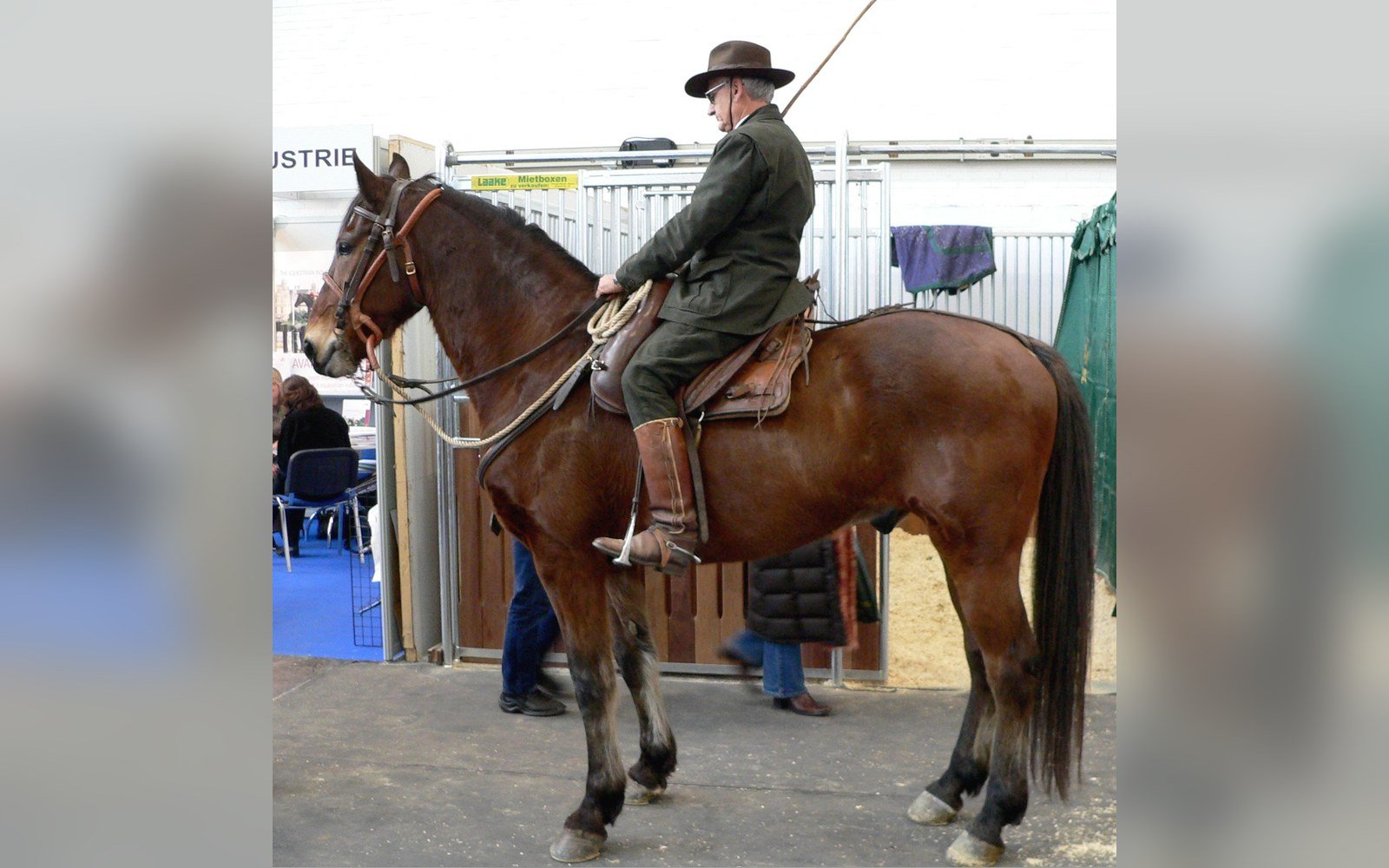
Photo: Marmemmano6 stehend Gang · Wikimedia Commons
A horse built for broken ground, long days and wet winters — not for the showring.
Bone Before Beauty
The Maremmano is a plain horse. Square-headed, heavy through the neck and shoulder, typically standing between 155 and 163 centimetres at the withers — it does not invite the word elegant. What it invites is confidence: the sense that the animal beneath you knows where it is putting its feet, will not argue about the weather, and will be in much the same mood at dusk as it was at dawn. In a region where riders spent entire days crossing coastal marsh and scrub, that composure was not incidental. It was the job.
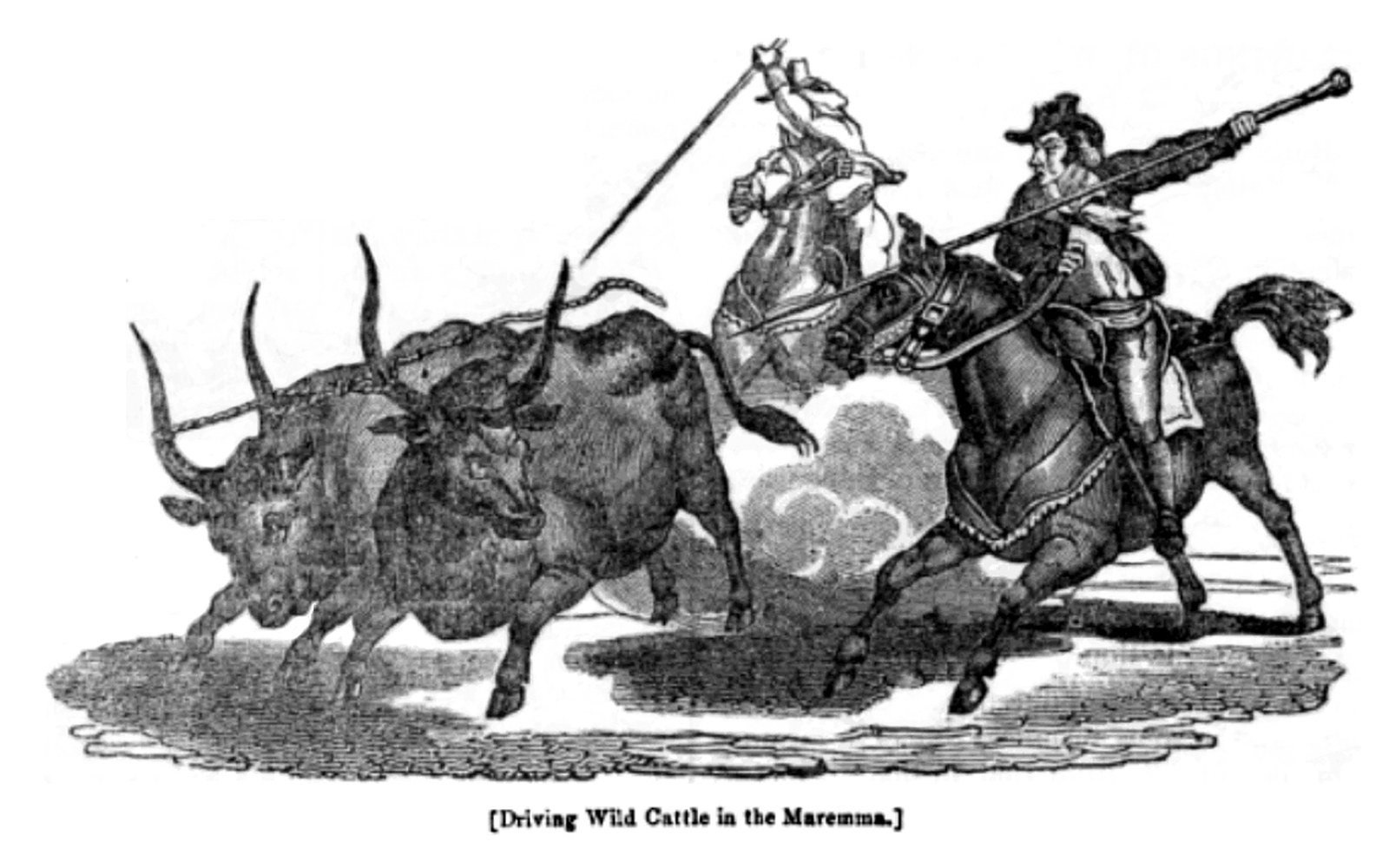
The asta is used against the flank to turn an animal: the buttero guides cattle rather than catching them.
Photo: Driving wild cattle in the Maremma · Wikimedia Commons
The breed's origins are layered. Roman-era horses in the region were almost certainly mixed with animals from the eastern Mediterranean, and through the medieval period the stock was shaped by further North African and Spanish influence arriving through southern trading ports. What consolidated those layers into something recognisable as a type was the particular hardship of the Maremma itself — low, seasonally flooded ground, dense macchia scrub, rough limestone outcrops — which selected hard over centuries for a horse that could work it without breaking down.
What the Buttero Asked For
The buttero, the mounted herdsman of the Maremma, needed a horse that could manage the Maremmana cattle — the long-horned breed whose movements dictated the working year — across terrain that no elegant horse would have lasted on. He rode with a long stick rather than a rope, so the horse had to be responsive but not reactive; willing to hold ground near an agitated animal without spooking. The Maremmano's low centre of gravity and comparatively short back helped. So did its hooves, which are wide, hard and open-heeled in a way suited to alternating between dry rock and soft marsh — a horse effectively shaped by the same landscape its rider was reading.
The traditional working tack reinforced this picture. The scafarda, the deep-seated Maremman working saddle, sits the rider low and far back, encouraging a stable, upright position suited to long hours rather than active horsemanship. Breed and saddle evolved together as answers to the same set of problems.
Chronology of pressures
Chronology of pressures
- Medieval periodNorth African and Spanish bloodlines reach the region through southern ports
- Late nineteenth/early twentieth centurymilitary use formalised; Augusto Imperiali among those documenting breed type
- Mid-twentieth centurylarge-scale land drainage contracts the working population sharply
- PresentParco Regionale della Maremma and ANAM studbook sustain the breed
By the late nineteenth and early twentieth centuries, the Maremmano had also found a second career. The Italian military used it extensively as a cavalry and artillery horse — sturdy, trainable, able to cover ground without demanding the high-quality forage that a more refined breed required. Augusto Imperiali was among those who worked to document and systematise the breed's type during this period, part of a broader effort to formalize what had previously been selected informally by landscape and necessity.
After the Drainage
The large-scale land reclamation that transformed much of the Maremma through the mid-twentieth century changed everything around the breed without immediately changing the breed itself. As the marshes were drained and agriculture mechanised, the working population of Maremmano horses contracted sharply. The horse that had been ubiquitous became uncommon. Today the Parco Regionale della Maremma ↗, centred on Alberese in the comune of Grosseto, remains one of the places where the horse and the working tradition it was built for can still be seen together — buttero, cattle and horse operating as a unit in landscape that resembles what the breed was bred for.
ANAM, the national breeders' association for the Maremmano, maintains the breed's studbook and oversees registration. The breed is not large in number, but its gene pool is considerably broader than several other Italian natives that passed through a severe twentieth-century bottleneck; the informal, landscape-driven selection that produced it also kept it genetically varied in ways a more deliberately managed studbook sometimes does not.
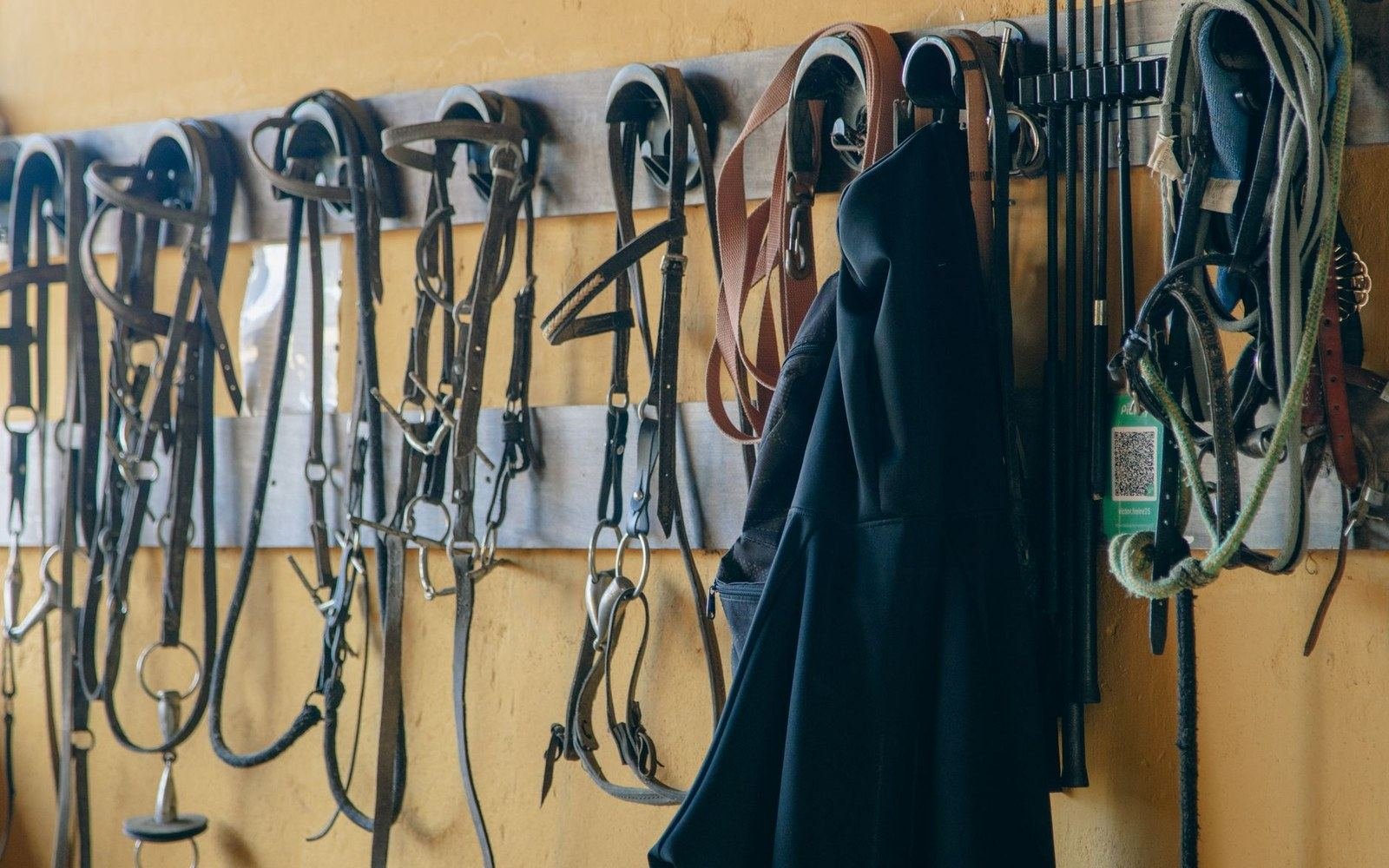
A working tack wall: the buttero’s kit is a deep saddle, a bridle and a long pole — no rope.
Photo: Wallace Silva / Pexels
It remains what it was made to be: not the fastest horse in Italy, not the most beautiful, but one of the most durable — and still, in the right country, exactly the right tool.
Read next