The Haflinger
Chestnut with a flaxen mane, from the Alto Adige — small, strong, and a studbook with an unusually tight founder line.
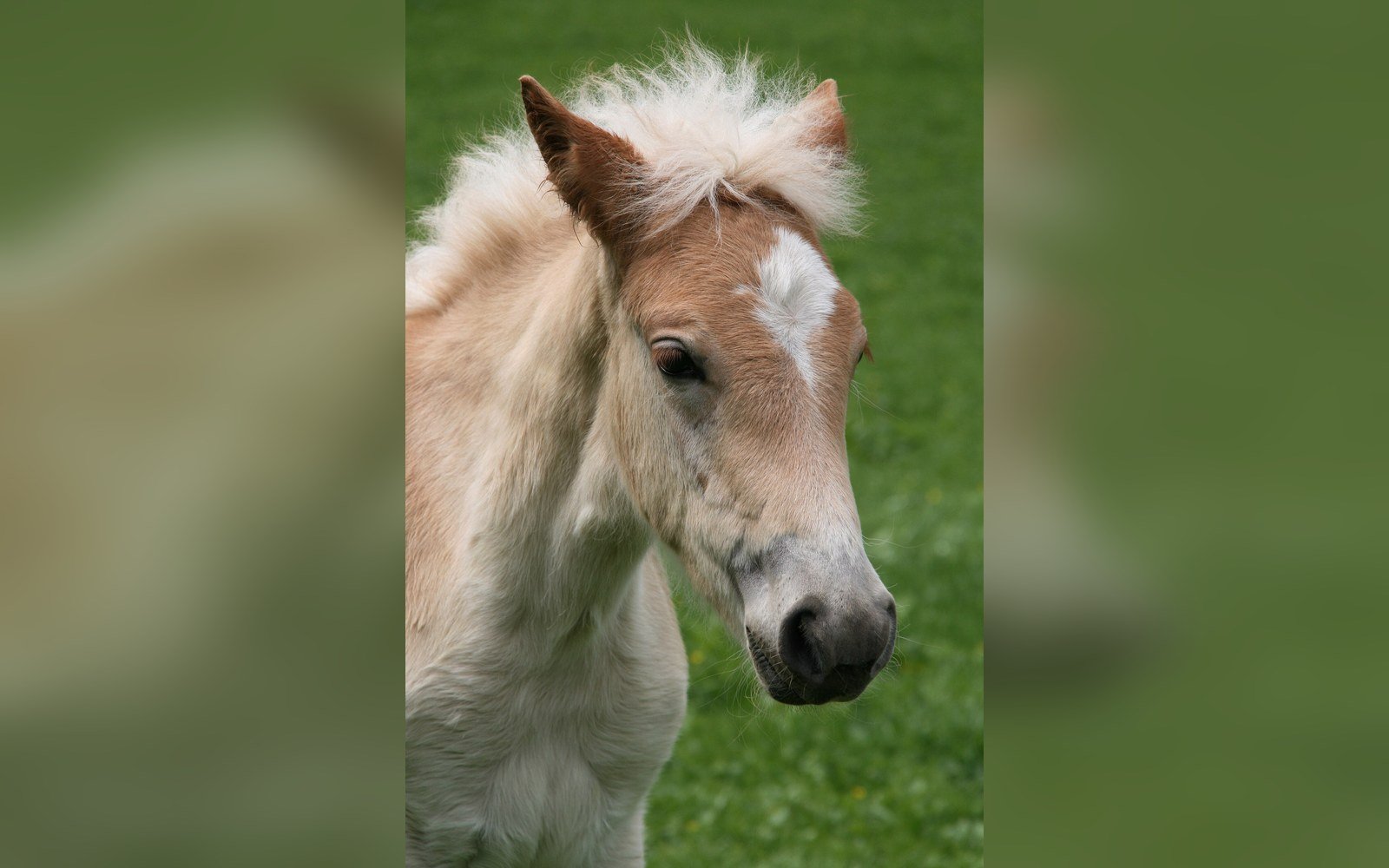
Photo: Haflinger Fohlen 01 · Wikimedia Commons
A mountain breed of unusual genetic depth, built from a single founding stallion and still recognisably his.
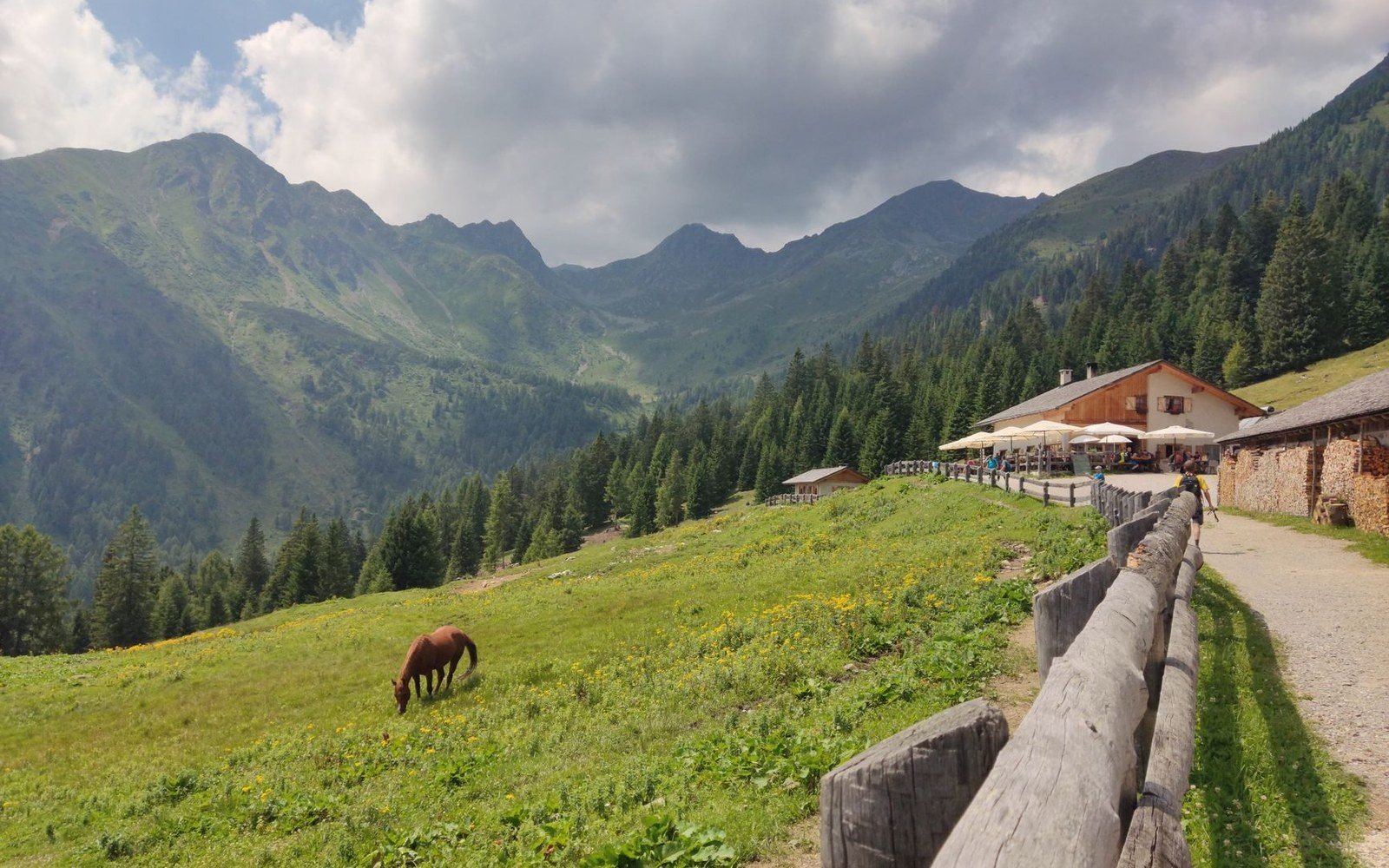
On Alto Adige slopes the working unit was the maso below and the malga above, with the crop moved between them.
Photo: Federica Flessati / Pexels
The Horse the Alps Made
The Haflinger comes from the mountains of Alto Adige — the German-speaking province of northern Italy whose principal town is Bolzano — and from the subordinate valleys that rise toward Austria and Switzerland. The ground there does not suit a heavy horse: slopes are steep, paths are narrow, and the working season oscillates between deep snow and hard summer sun. What the terrain asked for, over generations of selective breeding, was a compact animal with short cannons, a low centre of gravity, and the patience to work a long day in difficult footing. The result is always chestnut — coat ranging from pale gold to rich liver — and always carries a flaxen mane and tail. That combination is not vanity; it is the reliable signal of a gene pool whose depth and consistency are unusual even among established breeds.
The name comes from Hafling, now the comune of Avelengo in the province of Bolzano, where a breeding tradition for this type of mountain horse had existed for centuries. What turned a regional working type into a studbook breed was a single event: in 1874, a part-Arab stallion named 249 Folie was registered as the founding sire. Every Haflinger alive today traces its male line back to him through seven recognised bloodlines, each descended from one of his sons. The Haflinger studbook maintains this record with unusual rigour; the breed is one of the cleaner examples anywhere of what geneticists call a founder population — a closed gene pool derived from a documented original.
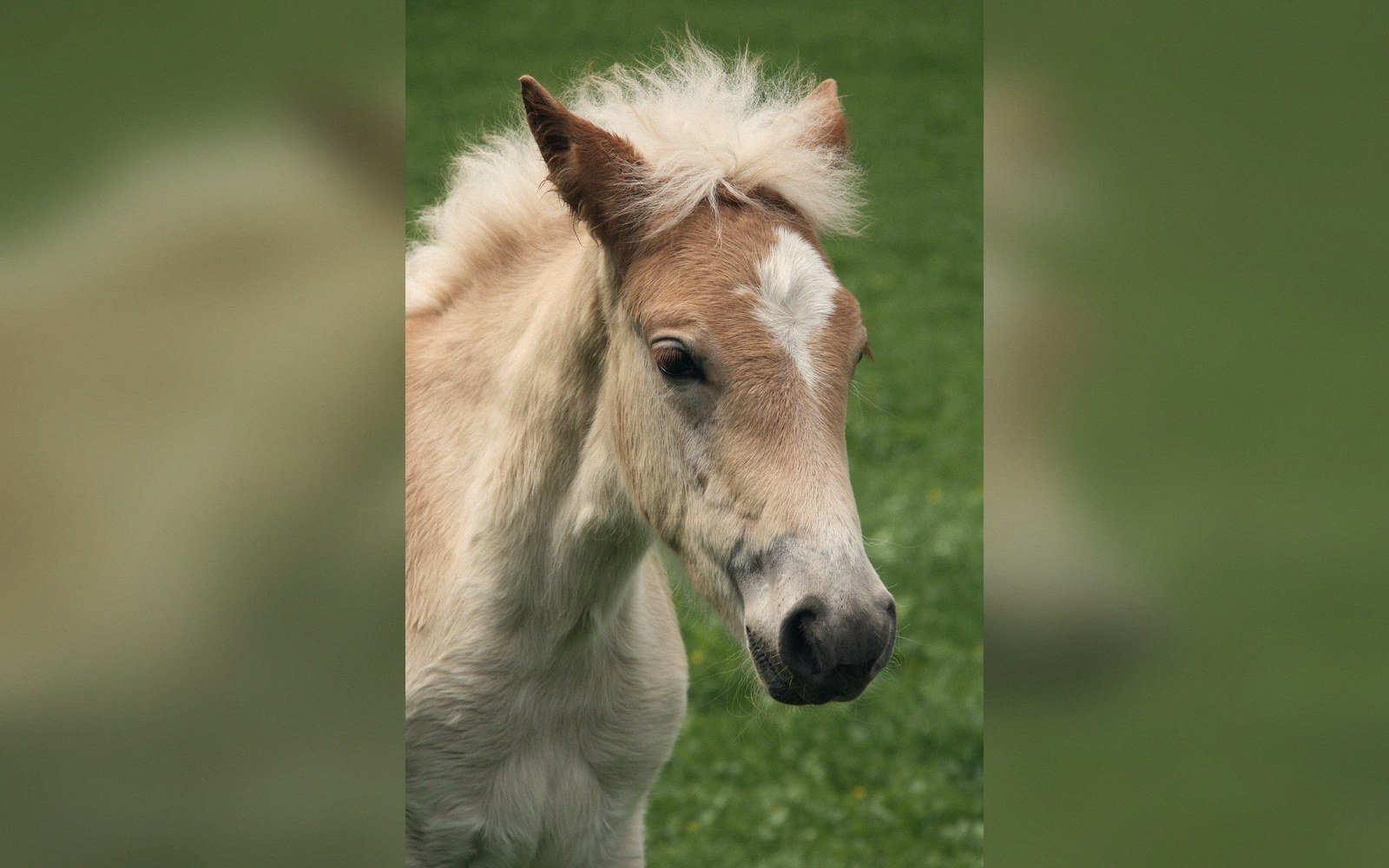
Haflinger foals are born dark and lighten to chestnut; the flaxen mane and tail are written into the breed standard.
Photo: Haflinger Fohlen 01 · Wikimedia Commons
What the Studbook Enforces
Registration is not automatic. Foals must meet colour standards — no white markings above the coronet on the hindlegs, no non-chestnut base colour — and stallions entering the breeding pool pass inspection at approved stations. The main site for stallion licensing in the Italian system is Merano, the comune of the same name in Bolzano province, where the historic racetrack has also hosted mountain breed evaluations. The result of this enforcement over more than a century is a breed that looks strikingly uniform: a horse between 138 and 150 centimetres at the withers, with a wide forehead, large eye, well-arched neck, and notably strong hindquarters for a horse of that size.
Chronology
Chronology
- 1874stallion 249 Folie registered; establishes the single founding male line
- Seven recognised bloodlineseach traced to a son of Folie; maintained in the studbook
- Late 20th centurymechanisation reduced draft use; breed shifted toward leisure and sport
The working history of the Haflinger in Alto Adige is one of farm haulage, timber extraction, and — critically — transhumance, the seasonal movement of livestock between valley pastures in winter and high Alpine grazing in summer. A horse that had to accompany flocks and cattle over passes that no wheeled vehicle could follow needed exactly the qualities the Haflinger carries: sure-footedness, a willing temperament, and an ability to maintain condition on sparse mountain forage. Mechanisation reduced demand for this work through the second half of the twentieth century, but it also pushed breeders toward a lighter, more refined stamp that suited leisure and sport uses, and the breed's numbers recovered accordingly.
The Body and the Bloodline
What sets the Haflinger apart from other small draft and mountain breeds is the combination of genetic traceability and phenotypic consistency. Most breeds accumulate founders over time; the Haflinger spent its formative decades intensifying from one. This means the breed carries a relatively low level of genetic diversity by normal standards — something the Italian national breed association, and its Austrian counterpart monitor through the studbook records. The practical consequence, visible rather than theoretical, is that a Haflinger in Bolzano and a Haflinger in Bavaria look like the same horse, because they largely are.
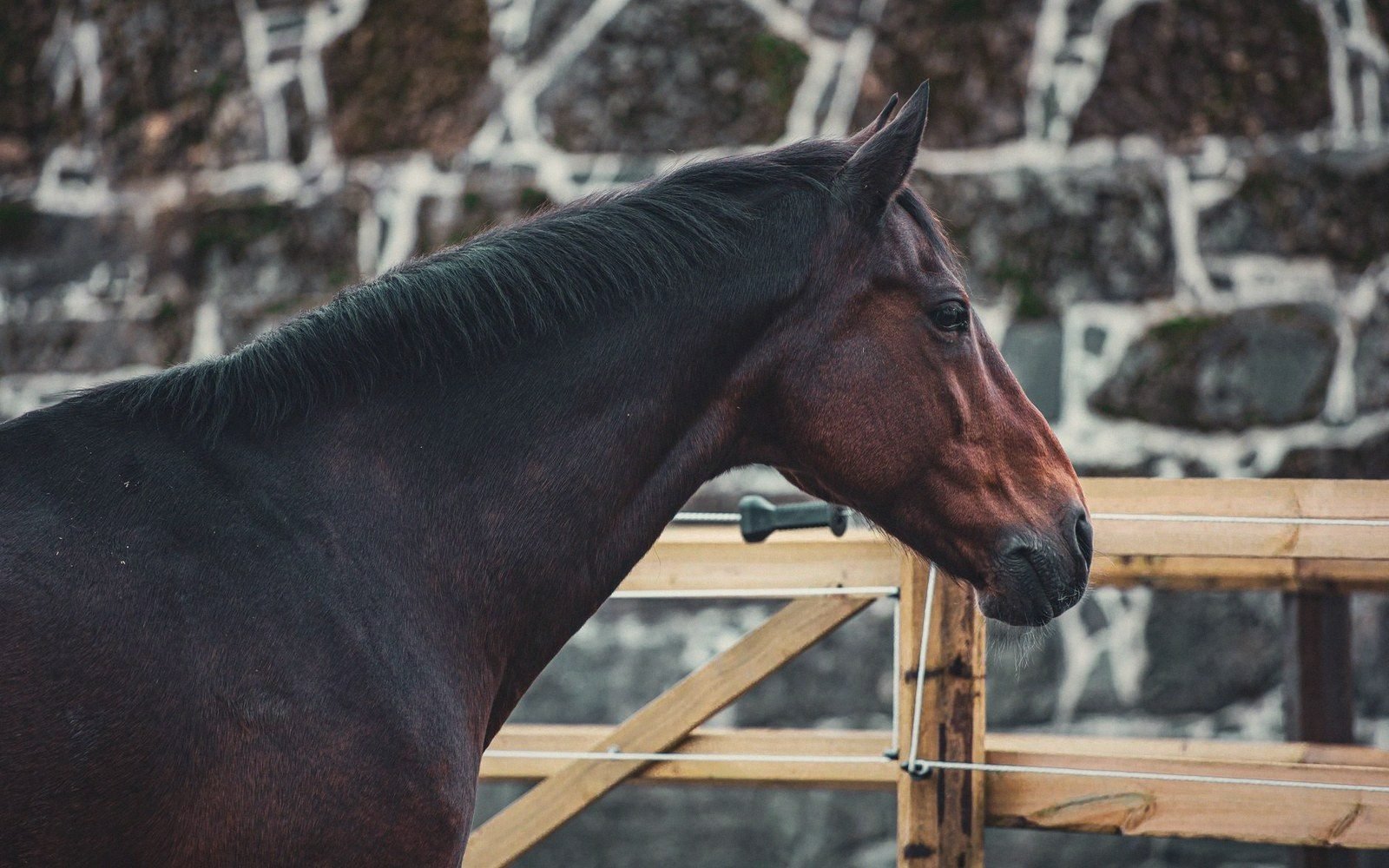
A breed is a closed book, a founder population and a set of registration rules rather than a look.
Photo: Aliaksei Semirski / Pexels
The alpine slope that shaped the breed is not a romantic abstraction. It is a specific set of mechanical demands — balance, short-coupled strength, hoof quality — that the horse had to meet in order to be kept. Selection pressure that rigorous, maintained across generations in an isolated mountain community, produced a type of unusual integrity. The chestnut coat and the flaxen mane are its most visible result; the tight founder line behind them is the more consequential one.
Read next