The Murgese
Black, hardy, nearly lost in the twentieth century and rebuilt from a small number of animals.
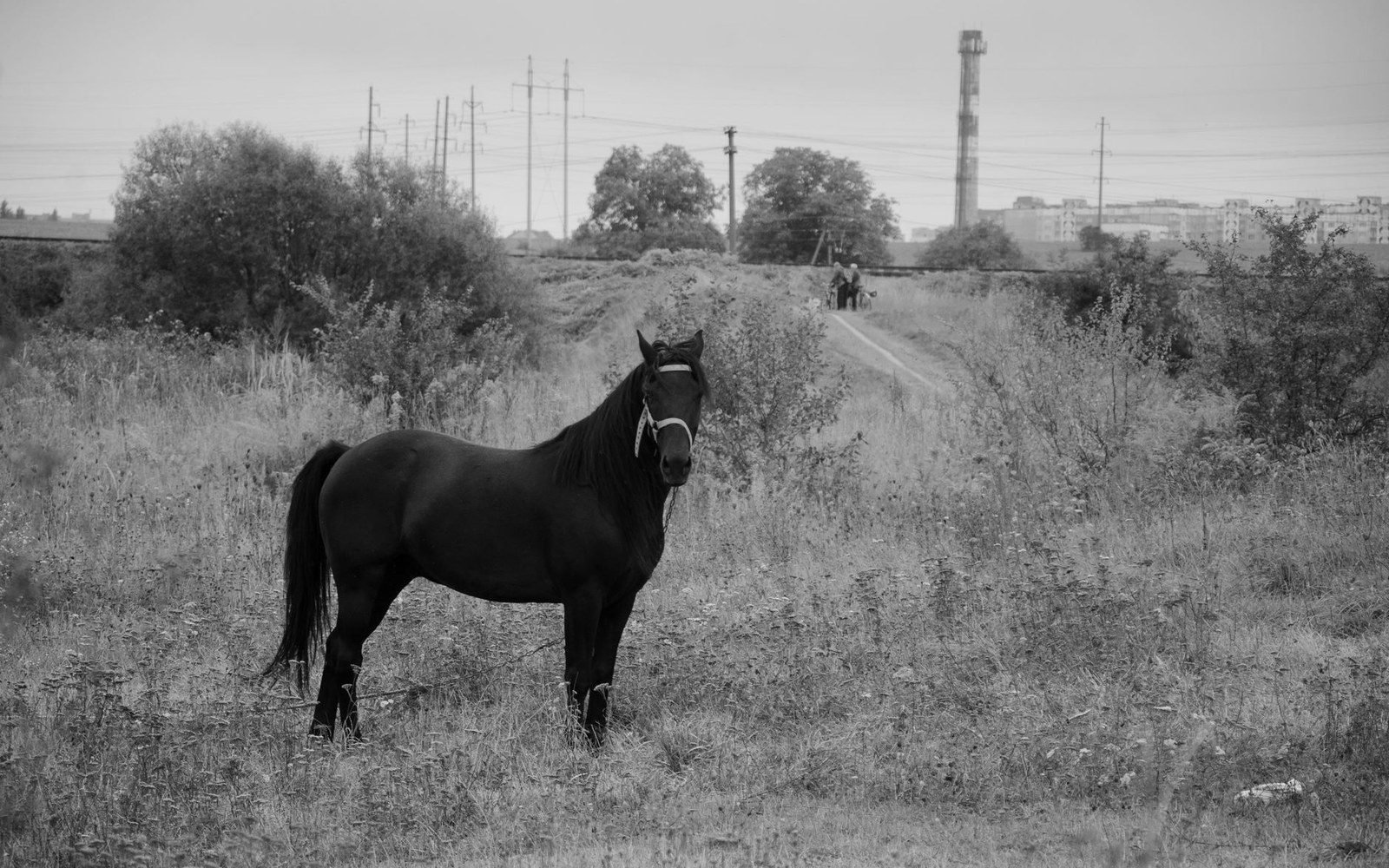
Photo: Vlad Kirilchuk / Pexels
From a dozen horses to a living breed — and what the plateau did to make it that way.
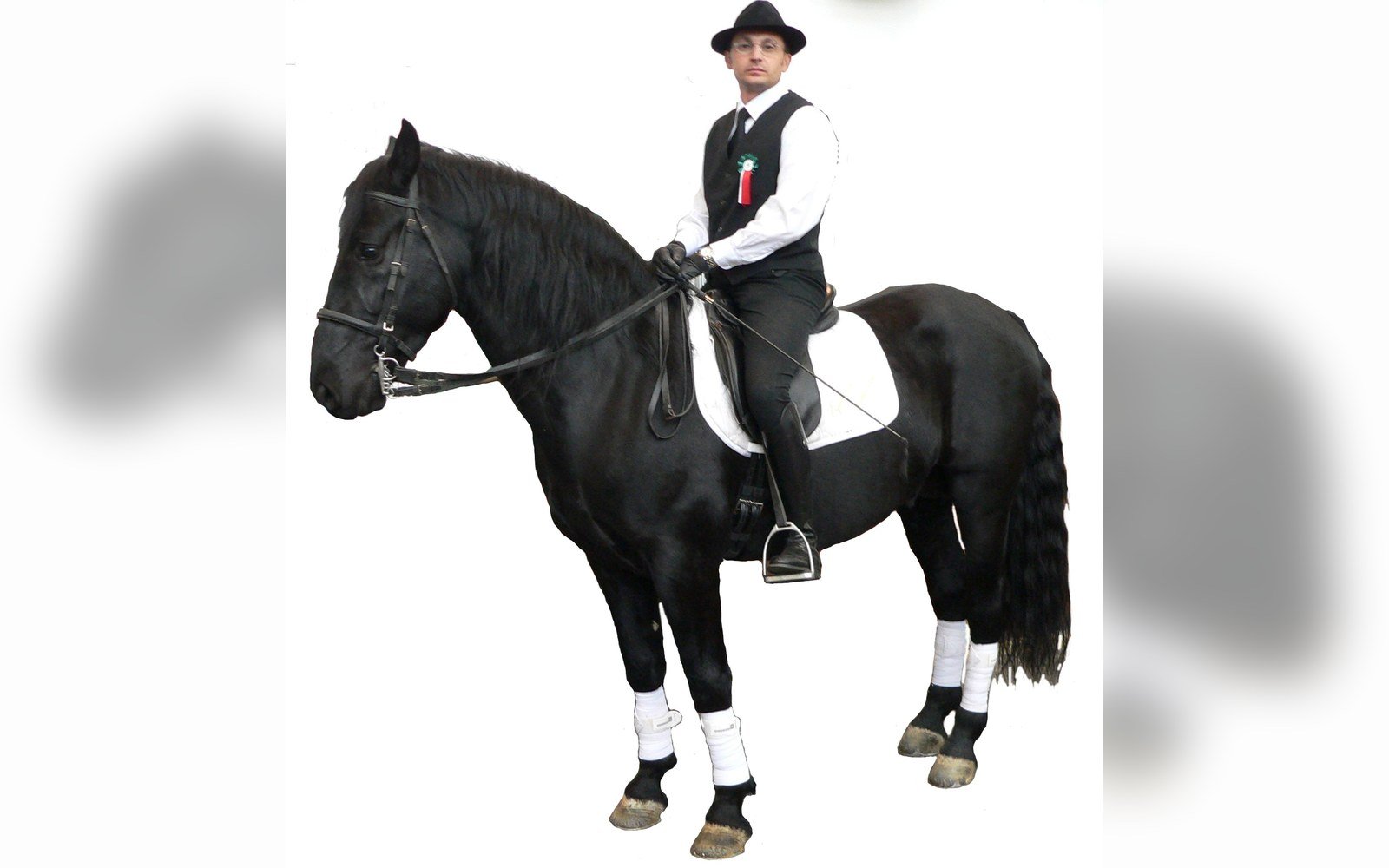
The Murgese is bred black or slate roan, on limestone pasture where the soil is thin and the water runs underground.
Photo: Murgese5 stehend Gang · Wikimedia Commons
Built by the Murge
The Murge plateau in Puglia is limestone country: thin soil over karst rock, scrub vegetation, summer heat that cracks the ground and winters cold enough to force the animals down from the higher ground each season. A horse bred here had to cover it on small rations, and the Murgese — mur-GEH-zeh — is the result. It is compact and deep-chested, with hard, well-formed hooves suited to stone, and a disposition that read, in working terms, as calm and economical rather than quick and excitable. The coat is typically black or dark bay, which early breeders in the region preferred, though dark roans occur. The overall impression is of a horse built for maintenance costs, not performance.
The breed has a long cultural presence in Puglia without a continuous documented history to match it. Spanish Barb blood almost certainly entered the population during the Aragonese occupation of the Kingdom of Naples in the fifteenth and sixteenth centuries — the Spanish brought horses, the region absorbed them — and later Oriental strains contributed to the mix. What came out was a distinct local type, bred in semi-wild conditions on the plateau, recognised by local stockmen long before anyone wrote it into a register.
Collapse and Recovery
By the early twentieth century the Murgese had contracted to a fraction of its earlier numbers. Agricultural mechanisation removed most of the working demand for horses across southern Italy, and the Murgese, which had never enjoyed the institutional backing that kept some northern breeds stable, was particularly exposed. By the 1920s, the breed had effectively collapsed to a small remnant population concentrated around Martina Franca, a comune in the Taranto province that sits on the plateau's high ground. The animals that survived there — a founder population, in the technical sense of the term — became the genetic base for everything that followed.
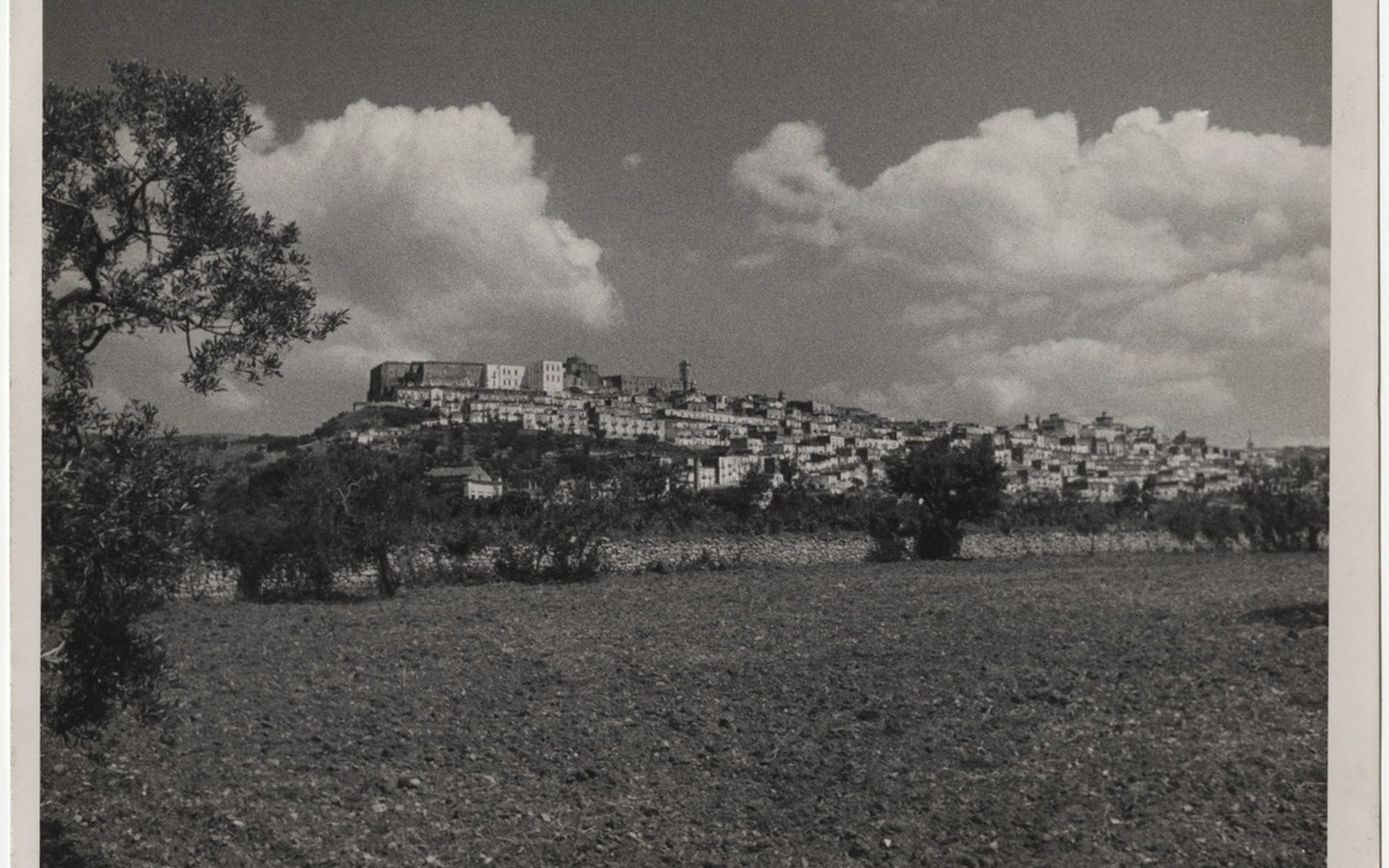
The Murge is limestone karst — thin soil, dry stone walls, and towns set up on the high ground.
Photo: Photo View of Minervino Murge 1936 - Touring Club Italiano s06043-01 · Wikimedia Commons
The recovery was slow and deliberate. ANAM, the Associazione Nazionale Allevatori del Cavallo Murgese (National Association of Murgese Horse Breeders), was established to hold the studbook and coordinate the breeding programme, and the registry gave breeders a formal framework for selection. The studbook matters here not as bureaucracy but as survival mechanism: closing the book and tracking pedigrees was the only way to prevent the remnant population from being bred out into something unrecognisable. The numbers rose gradually through the second half of the century. The breed is no longer considered at risk of extinction, though its population remains modest and the genetic base, given the severity of the twentieth-century contraction, requires continued management.
What It Does Now
Working the Murge in the traditional sense — light draught, transport, agricultural labour — is no longer the breed's main function. The Murgese today is used principally for trail riding and light riding disciplines, and it has found a secondary role as a crossing partner: mares put to a Thoroughbred or other light stallion produce a type suited to mid-level sport. The breed's particular value in that context is the soundness of constitution it inherited from a life on poor ground, not the speed or scope that a sport horse buyer might reach for first.
Chronology
Chronology
- 15th–16th centuryAragonese occupation brings Spanish Barb horses to the Kingdom of Naples
- Early 20th centurybreed population collapses; remnant survives around Martina Franca
- Mid-20th century onwardANAM established, studbook closed, gradual recovery
The coat colour remains a point of genuine distinctiveness. The black or near-black of the typical Murgese is not universal among Italian breeds, and it has become something of an identity marker — present in the breed standard, reinforced through selection and recognisable enough that a Murgese in a mixed herd is rarely mistaken for something else. That visual signature, the hard feet, the plateau constitution: these are what the ground made, and what a long period of near-extinction almost erased.
Read next